DOM'S SNIPPETS
Reflections on Life and Art

Previously I Only Touched on a Plot’s Highs and Lows
By Dominique Paul Noth
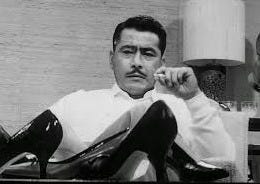
My last Dom’s Snippet was about my failed interview in the 1980s with writer Evan Hunter, also known under the pseudonym Ed McBain, creator of the 87th Precinct novels. His big one in 1959 was “King’s Ransom,” but his plot ideas have been “borrowed” constantly in the years since.
There is actually a current (2025) big-name movie on Apple TV based on this plot – “Highest 2 Lowest,” reuniting actor Denzel Washington and director Spike Lee. In publicity and in title, it is also inspired by Akira Kurosawa’s famous 1963 film “High and Low,” which in turn was inspired by Hunter’s novel as Ed McBain.
So there was a reason my mind was racing around from the Japanese movie I saw in my youth, the failed interview with Hunter in the 1980s and the new film, which sort of allows me to put on my movie reviewer hat of old.
All three items in discussion vary the name of the rich leading character around the word “King,” exalting his wealth and capitalistic importance.
He is Douglas King in the book, an executive who has gambled his own fortune to take over a shoe company. He is Kingo Gondo (famed Japanese actor Toshiro Mifune) similarly gambling his own fortune to leverage his nation’s main shoe company. We finally get biblical and away from shoes with Spike Lee, who names his music mogul, similarly gambling all his wealth, as King David, played by Denzel Washington, who shows a gift with famous rap lyrics as deep as his knowledge of Shakespeare.
Time has certainly elevated the ransom money involved – a half million in the book, 30 million yen (about a million US) in the Japanese film, and $17.5 million in 2025.
In the book, the police procedural methods of the 87th Precinct formula take a back seat as familiar detective Steve Carella serves as our voice of conscience, disgusted that Douglas King won’t pay the same ransom for the son of his chauffeur grabbed by mistake. This is the central plot idea of all three outings – the wrong kid but always a close playmate of the rich son, giving the rich guy clear moral conflict between keeping his money (to avoid poverty) and giving over to humanity (isn’t the poor kid’s life of equal worth?).
Kurosowa’s lifelong concern about the inequities of the Japanese social class – the difference between pursuing capitalism and keeping the poor downtrodden – shaped his choice of plot. The internal wrestle with guilt is demonstrated in rage and quiet suffering by Kingo Gondo, who succumbs to returning to cobbler status. In all outings the King is directly contrasted with the lead kidnapper, who knows his mistake and insists on his money anyway. In the Kurosawa film he is a medical student engaged in heroin deaths who hates the rich and believes he is striking a blow for social justice. (Hmm, we may be going through some of that today …)
Spike Lee cleverly changes King David to a music mogul, more in the talent lines of the late Quincy Jones than the media swagger of imprisoned Sean Combs. This allows the rich side of Manhattan to play in visual balance against the subway Yankees fans and the Puerto Rican street festival, where we spend wonderful but largely unneeded minutes with the late Latino keyboardist Eddie Palmieri.
Washington gives a solid performance with his ability to rap (using famous lyrics) with the villain, a fine performance by the really talented A$SAP Rapper, playing a rapper outrageously angry at King’s wealth and fame. (Given the extended chase scenes, the profane rapper apparently has recruited a gang of motorcyclists.)
Lee gets to quietly savage the New York police, with little moments where they suck up to the rich black mogul (when they think it is his son kidnapped) and dismiss and suspect the actual black father of the kidnapped godson (a neat cameo by Jeffrey Wright).
The Kurosawa film is considered a masterpiece – I remember the director used color footage for puffs of smoke (a key plot moment) in a black and white film. But he was also obsessed with dwelling on the underlife contrast to the wealthy Kingo and I don’t think he had much respect for Hunter’s plot gimmick except that it allowed his camera to range high and low.
It is fascinating to consider how often Kurosawa’s own plots were used in successful US westerns. He was certainly influenced by American films, but he gave more than he got – I’m thinking of “The Magnificent Seven” (lifted from his “Seven Samurai”) and two Clint Eastwood Italian-made westerns. “High and Low” was the other way around as was true with Kurosowa’s Shakespeare inspired “Throne of Blood.” In some ways, the fight between capitalism and basic humanity reminds me more of Kurosawa’s “Ikiru” than his western inspired outings.
Spike Lee’s “Highest 2 Lowest” doesn’t quite hold together as it wanders to find a tone, though it has fun moments. The chase scenes are overly extended; the musical choices have a strange schizo element.
The first half is Rodgers and Hammerstein and Muzak inspired, then warms up with Latino rhythms, a sometimes exciting use of rap (it becomes a way for the music mogul to prove his chops) and then a very strange conclusion where King David (Washington), supposedly an expert on what music sells, applauds too enthusiastically and waxes eloquent over Aiyana-Lee Anderson, definitely a good singer with an alluring presence, performing a pop music blend of “American Idol” and Jennifer Hudson (who can sing anything and unfortunately does).
The enthusiasm for the cliché music undercuts the believability the movie was trying to land and reminds us of what happens when Spike Lee tries too many side roads as a director.
It also allowed me to remember the value of looking back at our culture as well as looking present and future. There are lots of connections valuable to explore, and I do worry that the current American young public has not been encouraged to weigh how much of what they are going through is similar to the lessons of history.